
Kibale National Park
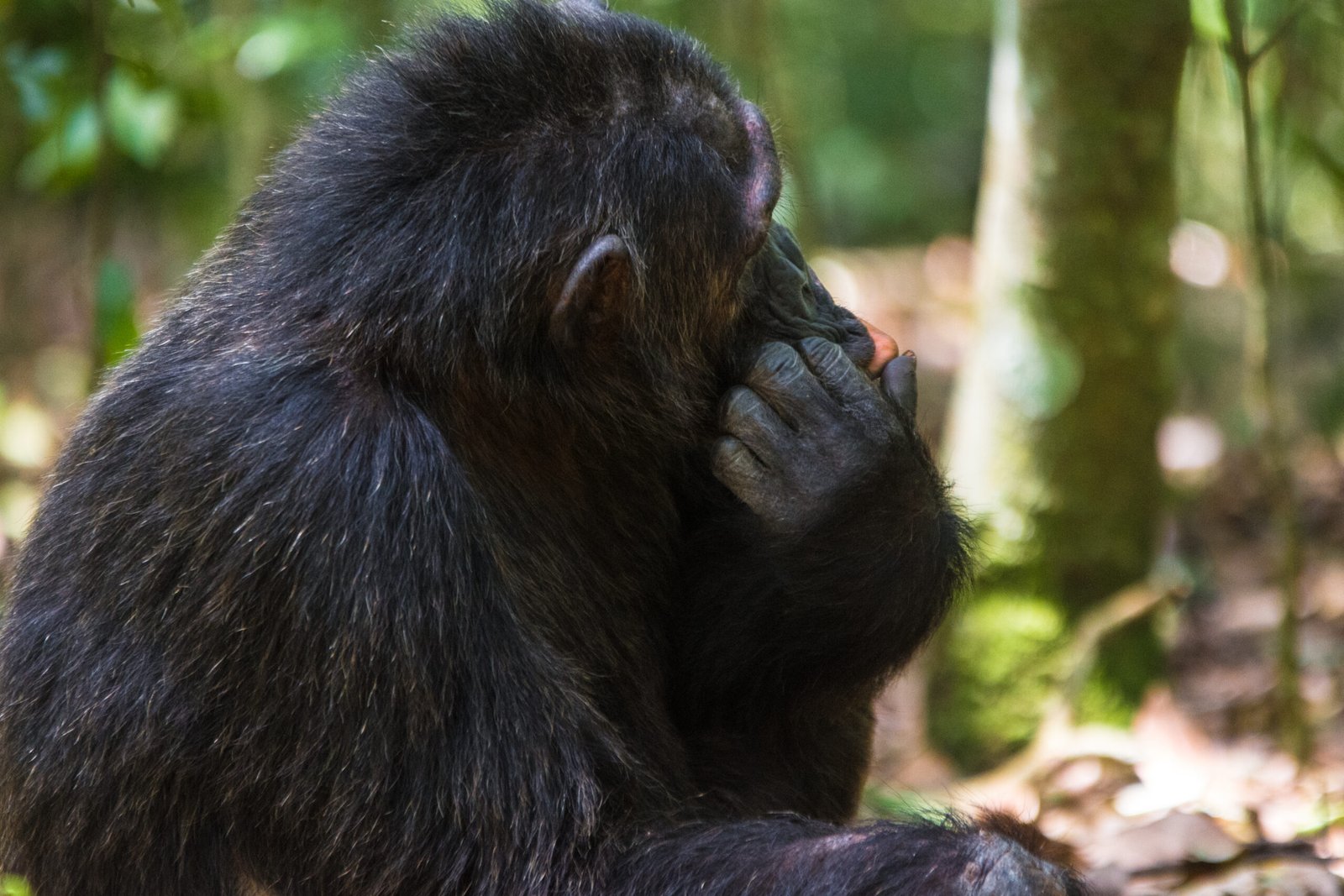
Kibale National Park is situated in southwestern Uganda, and it’s a tropical rainforest that shields a variety of wildlife species, which has attracted a number of tourists to Uganda. Kibale national park is a home to a number of primates that is chimpanzees, red tailed monkeys, black and white colobus monkeys, L’hoest’s monkeys, grey cheeked mangabeys and olive baboons, among others. With this variety, Kibale national park is frequently referred to as the primate capital.
Chimpanzees share 90% of their DNA with human beings. Kibale national park has over 1500 chimpanzees that are available for trekking. Therefore, for tourists planning a diverse and captivating Uganda safari, Kibale national park is an important stopover.
Kibale national park has an area cover of approximately 795 kilometers of rich tropical rainforest. The national park was gazetted in 1932, and it was initially established in 1933 to protect a large area of the forest that was previously managed as a forest reserve.
THE CHIMPANZEE TREKKING EXPERIENCE
Kibale forest is the best place in Uganda where chimpanzee trekking takes place and guarantees the best view of these endangered species. Other places where chimpanzee trekking takes place are Budongo Forest in Murchison Falls, Kalinzu Forest, and Kyambura Gorge in Queen Elizabeth National Park.
When tourists arrive at Kanyanchu, which is the park headquarters, they are briefed about the chimpanzees and informed about the rules and regulations of the trekking activity.
After the tourists are grouped, there are 6 people in each group. After each is allocated a guide who will lead them into the forest. Once the tourists spot the chimpanzees, they will spend an hour as they observe the chimpanzees playing, breastfeeding, feeding, and nurturing their young ones as well as communicating with each other.
Tourists will be given an opportunity to take pictures. The trekking takes 2 to 5 hours depending on the chimpanzees’ movements and other factors such as weather and the terrain. Afterward, tourists will return to the park headquarters, where they will be awarded a certificate of participation.
However, in order for tourists to engage in this activity, they must be 16years and above. This is done so as to avoid the risk of transmitting diseases, such as flu, cough, and other respiratory infections, that children are likely to have.
This is also done for safety issue as chimpanzees are wild apes that can tend to be aggressive in case they feel threatened. Still trekking the chimpanzees comes with discipline and compliance of the rules where some children may tend to defy the rules by making noise or make a direct eye contact with these apes. So, to avoid all these the trekking is only restricted to persons 16years and above.
ACTIVITIES IN KIBALE NATIONAL PARK
While on a Uganda safari, tourists in Kibale national park tend to engage in a number of activities that make the safari remarkable. These include
Chimpanzee trekking
Chimpanzee trekking is the major activity within the national park. chimpanzees Tracking allows tourists to search for primates in their natural habitat. With the existence of over 1500 chimpanzees, trekking these endangered species becomes so easy.
The tracking in Kibale takes place in 3 sessions: morning, which starts at 8am; midmorning, which begins at 12pm; and afternoon, which begins at 2pm, all throughout the year. Tourists tend to spend 1 hour with these primates once they are located.
Chimpanzee habituation
Chimpanzee habituation is a process where tourists tend to join researchers in training the chimpanzees to get used to the presence of human beings in their natural behaviors. The habituation process takes place at any time of the year and it’s only carried out in Kibale national park. The process takes 4 hours as tourists watch them play, feed and relate to one another.
Primate tracking
Besides the chimpanzees, Kibale national park has over 13 primate species such as the golden monkeys, L’hoest’s monkeys, white and black colobus monkeys, red tailed monkeys and grey-cheeked mangabeys, among others, thus making tourists have a variety to see while on their African safari.
Birdwatching
Kibale national park is considered a birdwatchers’ paradise with over 375 bird species that are recorded. The combination of grasslands, wetlands and forest habitats tends to support a number of bird species. Some species that are notable include the great blue turaco, yellow billed barbet, blue-breasted kingfisher, and crowned eagle, among others.
Birdwatching within the national park is more rewarding, thus making it a wonderful african safari.
Cultural encounters
A visit to Kibale Forest offers tourists the chance to engage in cultural experiences, interact with local communities, learn about traditional farming practices, make banana drinks, and enjoy cultural performances. All these offer insights into the day to day lifestyles of the people staying near the national park, hence creating a more remarkable African safari experience.
Bigodi wetland sanctuary
Nature walks in Bigodi
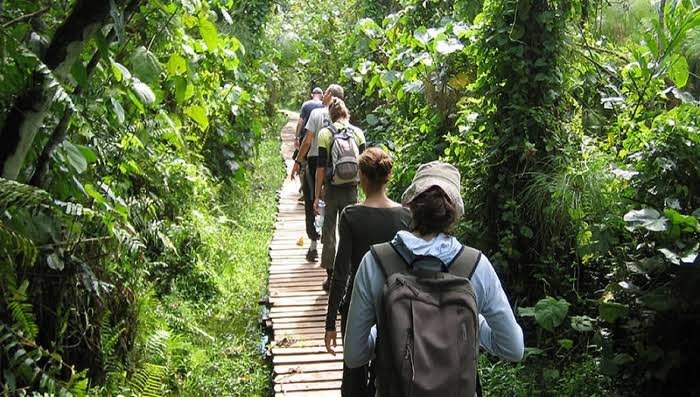
Bigodi is a jungle swamp and it’s one of the important places tourists tend to visit while on their Ugandan safari. The Bigodi wetland sanctuary has many attractions, such as mammals, birds and a number of unique primate species.
The wetland is also a walking safari experience for tourists. The swamp is found 6 kilometres away from the national park head office. However, the swamp is popularly known as a birders’ haven. A walk through the Bigodi swamp is done after the chimpanzee tracking in the afternoon, and it takes 2 to 3 hours to walk through the wetland with papyrus reeds and palm trees.
Nature walks
While at Kibale national park, tourists embark on a guided nature walk within the forest where they get the opportunity to observe a variety of flora and fauna species. While on the nature walks, tourists get to learn more about different bird species and also see several primate species, such as the black and white colobus monkeys, which enhances their african safari. Nature walks are carried out in the mornings, afternoons, and evenings.
Crater lake visit
Kibale National Park, located near Kasenda, boasts over 50 crater lakes, surrounded by steep volcanic slopes. Tourists tend to add the crater lake visit on their Uganda safari so they can hike up to these volcanic slopes to have an insight into these crater lakes.




The app version is so much better than the browser. Installation was a breeze and the graphics are top notch. Great job on 7gameasiaapk.
I’ve been looking for a reliable way to access my account and this is by far the smoothest experience. Everything loads fast and the interface is super intuitive. Check out nogod888login for a hassle-free start.
Really enjoying the current promotions. The gameplay is fluid and the wins feel rewarding. Jump into pkq98 and see for yourself.
Just hit a decent win and the withdrawal was processed almost instantly. This is how it should be done. Visit erabet888
No more endless loading screens. The login is instant and the connection is stable even on my mobile data. A very seamless gaming experience at jili588casinologin