
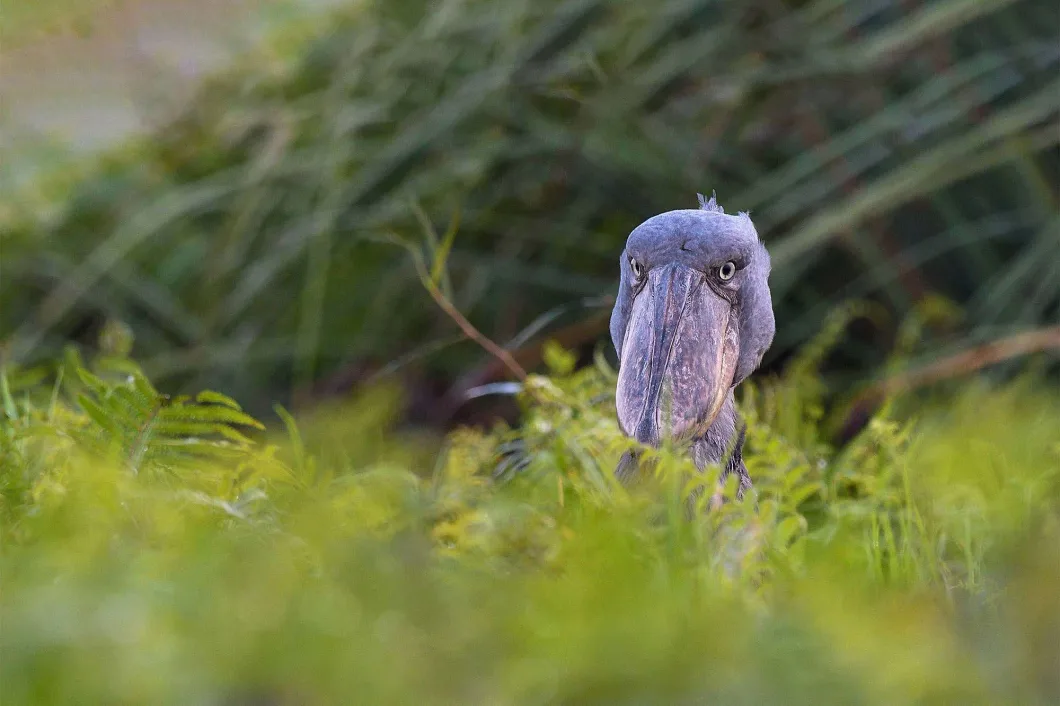
Where Can A Shoebill Stork Be Seen In Uganda?
Where Can A Shoebill Stork Be Seen In Uganda? The shoebill stork is among the most beautiful and sought-after bird species in Africa. Famous for its prehistoric appearance, big shoe-shaped bill and mysterious behavior, the shoebill attracts birdwatchers, wildlife photographers and safari tourists from all over the world. Uganda is one of the best countries where one can spot the rare shoebill stork within its natural wetland.
Known scientifically as Balaeniceps rex, the shoebill is frequently found in large freshwaters, wetlands, papyrus marshes and slow-moving water channels. Due to Uganda’s rich wetland ecosystems and protected areas, the country provides various locations where tourists can easily observe the rare shoebill stork.
Why is the shoebill stork special?
The shoebill stork is frequently regarded as one of the most rare birds in the world. Its big bill is similar to a wooden shoe, thus giving the bird its popular name. Standing at about 5 feet tall, with a wingspan reaching over 8 feet, the shoebill has an intimidating but beautiful appearance. The bird is popular for its appearance like a dinosaur, slow and silent hunting style, unique bill shape, and rare and elusive nature.
The shoebill stork feeds mainly on lungfish, catfish, frogs, water snakes and small reptiles. Due to being secretive and highly territorial birds, observing a shoebill within the wild is considered a major achievement for the bird lovers.
THE BEST PLACES TO SEE THE SHOE BILL STORK
Mabamba swamp
Mabamba Swamp is the most recognized as the number one shoebill stork destination in Uganda and one of the most important wetland birding sites in Africa. Situated on the edge of Lake Victoria next to Entebbe, Mabamba Swamp is easily accessible, hence making it an ideal starting point for any Uganda birding safari. The large papyrus wetland is home to the constant population of the shoebills, thus offering birders one of the biggest success rates for observing the rare species.
Birding at Mabamba is often carried out using traditional motorized canoes, which move through the narrow papyrus-lined channels. Early morning birding excursions offer the highest chances of observing the shoebill stork hunting lungfish in shallow waters.
The Mabamba swamp is the best location to spot the shoebill because of its closeness to Entebbe International Airport, perfect for short birding safaris, excellent bird photography, professional local birding guides and a calm canoe-based birding experience. Besides the shoebill, other birds that can be observed include the papyrus gonolek, African jacana, pied kingfisher, African pygmy goose and malachite kingfisher.
Lugogo swamp
Lugogo Swamp is not widely known as a shoebill habitat and it’s situated in eastern Uganda. It provides a more quiet and more exclusive birding safari experience, perfect for tourists that prefer less crowded destinations.
However, the shoebill sightings are not as predictable as the ones in Mabamba. Skilled bird guides increase the opportunity of a successful encounter while on an early morning excursion.
The major highlights include an oof the beaten path birding safari destination, a calm wetland environment, and it’s perfect for photography.
Lake albert delta
Lake Albert delta wetlands are among the most crucial shoebill habitats in Uganda. This remote and not commonly visited area has extensive marshes and shallow water channels perfect for the feeding of the shoebill stork and nesting.
During the Lake Albert encounter, birders may observe the shoebill storks, herons, pelicans, kingfishers and African skimmers. The area being remote makes it attractive for the serious birdwatchers and wildlife photographers searching for a more personal birding experience.
Murchison falls
Murchison Falls is the largest national park and one of the best rewarding safari destinations that combine wildlife viewing and shoebill spotting on a full African safari experience. While at Murchison Falls, the best place to see the shoebill is the Nile delta, where the Victoria Nile spreads into Lake Albert. The area is rich in papyrus swamps and shallow waters, thus making it a perfect ground for feeding the shoebills.
Tourists enjoy a boat cruise along the Nile delta, thus providing high chances of spotting shoebills standing still among reeds as they hunt catfish and lungfish. The experience is frequently combined with game drives and a thrilling Murchison Falls.
While on a birding safari, tourists can observe wildlife species and birds such as the goliath heron, African fish eagle, saddle-billed stork, Nile crocodiles, hippos and elephants, among others.
Ziwa rhino sanctuary
Ziwa rhino sanctuary provides an extraordinary and unique opportunity to observe the shoebill on foot, thus making it one of the most captivating and thrilling stops on an African safari in Uganda.
Besides canoe safaris, Ziwa allows tourists to explore wetlands on guided walking trails with skilled rangers. This creates a more captivating birding experience where tourists can follow signs of the shoebill through the swamp channels.
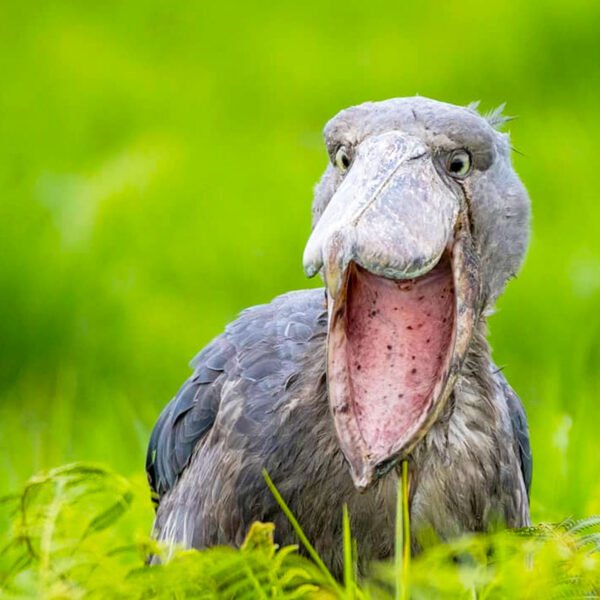
Shoe Bill
Ziwa rhino sanctuary is so special because it offers a walking shoebill tracking experience, combining rhino trekking and birding safari; it’s less crowded and more intimate, perfect for photography opportunities and educational conservation experiences. Besides the shoebill stork, grey crowned crane, African fish eagle, kingfishers, herons and African wattled lapwing.
BEST TIME TO SEE SHOEBILL STORKS IN UGANDA
Shoebill birding tours in Uganda can be carried out throughout the year but the best time for sightings is during the dry seasons. This is December to February and June to September. During this season, the wetlands can be easily accessible, water levels are lower, canoe navigation is smoother, and better visibility of birds and photography is possible.
The early morning birding encounters offer high chances of very successful shoebill sightings because the birds are more active in the cool hours.
Uganda is among the best birding safari destinations in Africa for spotting the rare shoebill, hence making it a top choice for any African safari. From the popular wetlands of Mabamba Swamp to the big Nile delta in Murchison Falls National Park and the walking trails of Ziwa Rhino Sanctuary, Uganda provides many reliable and more rewarding locations for shoebill stork sightings.



I’ve been playing here for a few weeks now and the payout speed is actually impressive. Really smooth experience so far! Check out arbet32
Finally found a place that doesn’t make the sign up process a nightmare. Everything is straightforward and the games load fast. Love luckybetregisterlogin
The mobile app is a game changer. I can play my favorites on the go without any lag. Definitely recommend f168app
I’ve been trying out a few sites lately and this one really stands out. The interface is smooth and the payouts are surprisingly fast. Definitely my new favorite spot to hang out. Check it out at phokadaplay
The bonuses here are insane! I managed to get a nice win on my first try today. Definitely spending more time on krbetmgm from now on.
The app is super lightweight and works perfectly on my phone. No more crashing when I am in the middle of a big win. This is the way to go. Download k77777app today.