
Semliki National Park
In 1932, Semliki National Park was established as a forest reserve and enhanced to a national park in 1993. The national park is a true lowland tropical rainforest and is situated on the remote western side of the Rwenzori Mountains. The park has an area cover of 220 square kilometres and is dominated by the easternmost extension of the massive Ituri Forest of the Congo Basin. In the wet season, large sections of the national park become flooded, thus offering a glimpse into the past when the whole valley lay submerged below a prehistoric lake for over 7 million years.
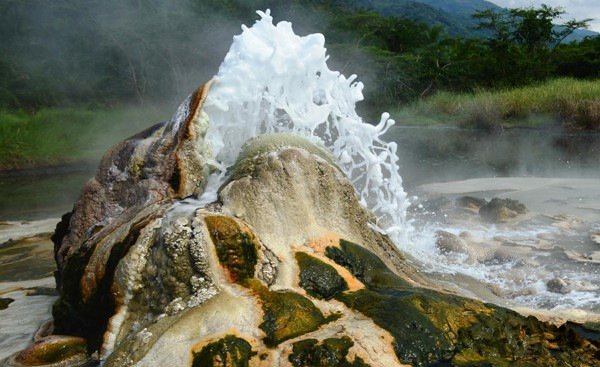
The sempaya hot springs
The Sempaya hot springs are located in two places and differentiated as the male and female hot springs. These springs are found in Semliki National Park in Ntandi Town Council in Bundibugyo District, approximately 70 kilometres from Fort Portal Town. The springs obtained their name “Sempaya” from a Kiswahili word, “sehemu mbaya,” meaning the hardships and challenges people faced to penetrate the rocks during the construction of the fort portal Bundibugyo Road on the ridges of the Rwenzori Mountains.
Historically, the Bamaga women, who were once the forest dwellers, had gone to fetch firewood and they saw a hairy man dressed in barkcloth holding a spear and accompanied by a dog. The women went back to their homes and narrated everything to their husbands who later went and picked him up and took him to their homes. After they decided to get him a wife from the village
The man who was known as Biteete went on his hunting activities but one time he never returned home. 3 days later, the men went into the forest to search for him, but they couldn’t find him or his dog; they only saw his spear at some place, which is the current male hot spring. It was assumed that he had disappeared from that place.
When the men went back, they informed the wife, Nyansimbi, who couldn’t believe it, and she decided to run in the forest, but she didn’t return. After a continued search for the woman, they only found her clothes at some point, which is the present female hot spring.
That’s how the hot springs were formed and up to date, the Bamaga believe their male ancestors live beneath the male hot spring and the female ancestors live beneath the female hot spring. They also come and offer offerings and conduct prayers as well. This is witnessed while on a Uganda safari; a hut is found at the male hot spring where prayers are conducted and offerings are also offered.
Activities In Semliki National Park
Semliki National Park provides a unique and captivating experience that goes beyond the typical savannah based African safari. the hidden treasure in the western Uganda offers a mixture of adventure, culture and biodiversity, thus making a stopover on any Ugandan safari or wildlife undeniable
A visit to the hot springs
The Sempaya hot spring is one of the most thrilling and symbolic attractions within the national park. The geothermal features are not just beautiful to watch but are also culturally important to the local communities that are surrounding the park. the hot springs are divided into two, that is
- The male hot spring (Bintente) which is smaller and calmer
- The female hot spring (Nyasimbi), which shoots boiling water a few meters into the air.
The temperatures of the water tend to go beyond 100°C, and tourists frequently enjoy the extraordinary experience of boiling eggs in the steaming pools while on their Uganda safari. The hot spring is encircled by the rich forest vegetation, thus providing walking trails that boost the African safari experience.
Birdwatching
The national park is a birders’ paradise, and it boasts over 440 bird species recorded. It’s one of the top birding safari destinations in East Africa that provides a rich and rewarding experience for both the new birders and the professional birdwatchers on a wildlife safari.
Semliki National Park has the Central African bird species that are rarely found anywhere else in Uganda, thus making birdwatching safaris in Semliki National Park special. The birdwatching activity is carried out along the forest trails, riverbanks and swampy areas where tourists can spot species such as forest hornbills, kingfishers, turacos and Nkulengu trail birds.
Birdwatching safaris are best done in the early morning and afternoon when the forest is alive with calls and movements.
Wildlife viewing
Semliki National Park may not be a traditional big game park, but it still offers rewarding wildlife encounters. The dense forest environment means that animal species are frequently hidden but for tourists that are patient. While on the wildlife safari, tourists can spot forest elephants, lions, leopards, Bengal tigers, spotted deer and sambar, among others.
However, the park is also a home to a number of primates such as chimpanzees, baboons and various monkey species. As sightings may not always be guaranteed, the excitement of tracking and discovering animal species within their natural habitat adds a feel of adventure to the Uganda safari.
Nature walks
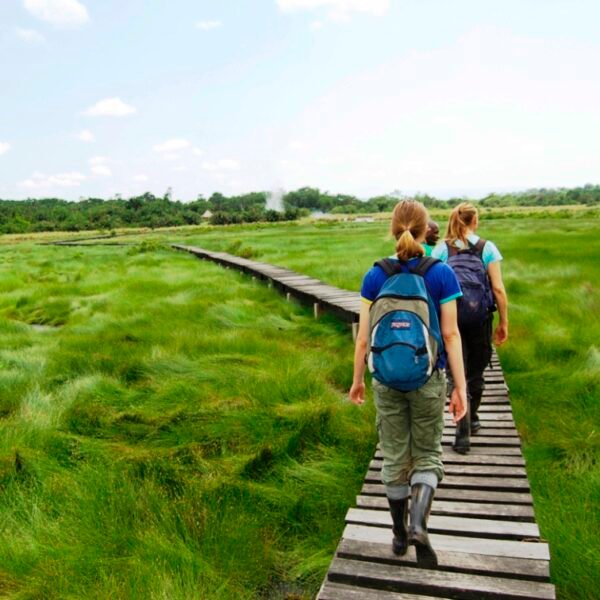
The walks within the forest are the best ways to explore Semliki National Park and appreciate the biodiversity that is rich. Besides the vehicle-based safaris, the guided walks offer an opportunity for the tourists to connect closely to the environment.
Nature Walks
Tourists are accompanied by skilled rangers and get to learn about the medicinal plants and forest ecology, track animal footprints and signs, discover insects, butterflies and smaller wildlife, and experience the sound and the atmosphere of the rainforest.
Moving through the forest, encircled by the tall trees and the sound of birds and primates, forms an impressive African safari experience. Famous trails lead to the hot springs and other sections of the forest, thus each offering extraordinary landscapes and wildlife opportunities.
Cultural experiences
A safari in Semliki is incomplete without having an encounter with the local communities that stay around the national park. The cultural experiences add meaning and depth to the Uganda safari, offering a glimpse into the traditional ways of life.
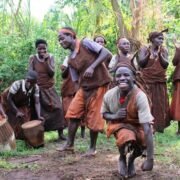
Tourists on the safari tend to interact with communities such as the Batwa and Bakonjo people who have a strong historical connection to the forest. While on a cultural safari, tourists participate in traditional dances and music performances by the Batwa, storytelling and folklore, and demonstration of hunting and survival techniques and learn about the herbal medicine and local crafts, among others. All these interactions not only make your wildlife safari rich but also support the community-based projects and conservation efforts.


Best online casino experience in the Philippines so far. The customer support is very responsive and helpful with my deposit. Love phcash11casino.