
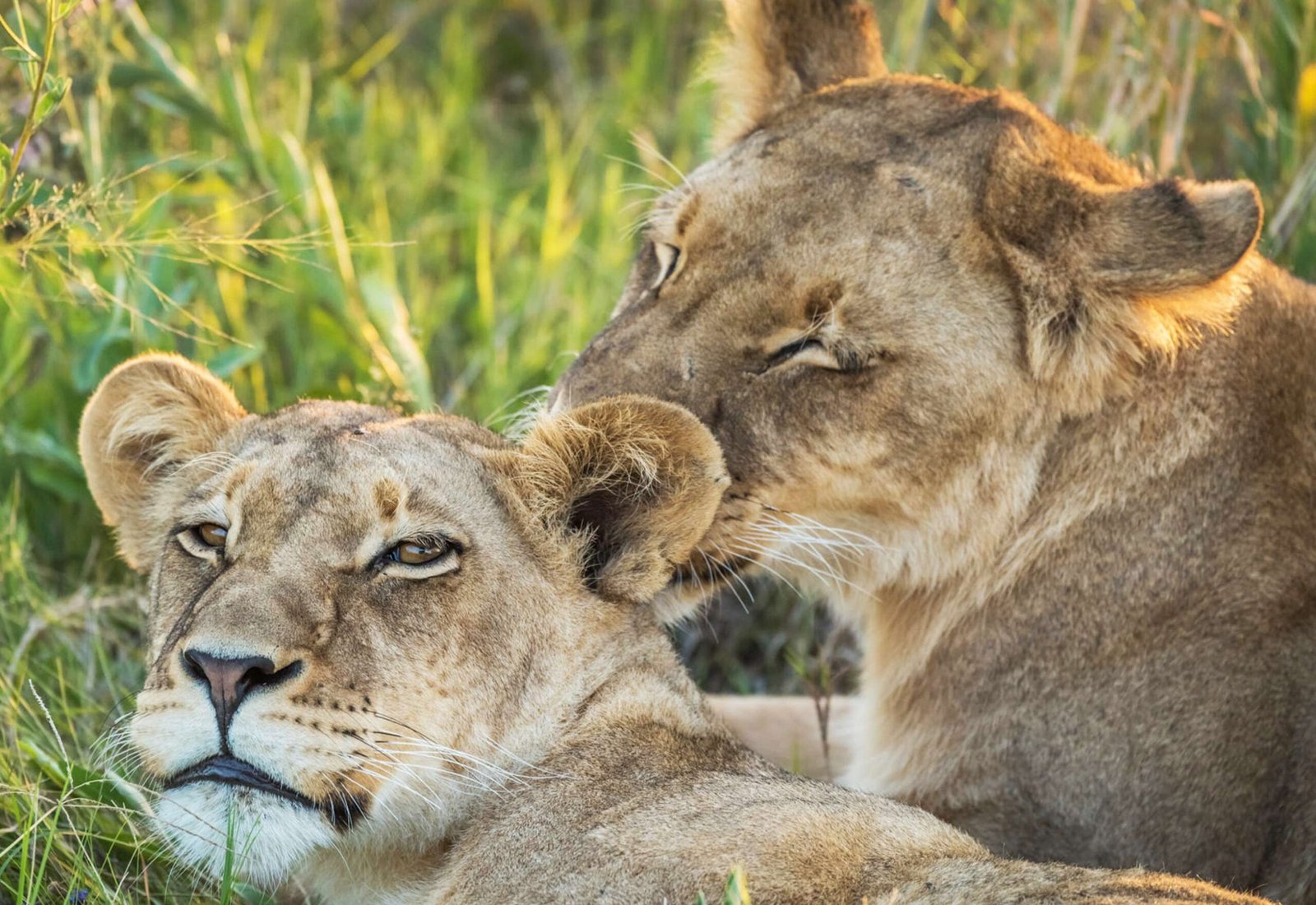
Queen Elizabeth National Park
Queen Elizabeth National Park is the most famous and biodiverse safari destination in Uganda offering breathtaking landscapes, vibrant wildlife and rich cultural heritage. Across the equator, the national park has monuments that have the exact spot where it crosses latitude 0°, which adds to its uniqueness.
Initially Queen Elizabeth National Park was called Kazinga National Park in 1952 but was later renamed to honor the visit of Queen Elizabeth II of England. It now stands as one of the greatest wildlife havens in Africa, home to over 95 mammal species and an astonishing 600+ bird species, hence making it a paradise for nature lovers.
Situated in the Kasese district, the national park has a number of ecosystems made up of spreading savanna, moist forests, lakes and fertile wetlands, which make it a good home to many species of wildlife, primates and birds, thus making it a home and a key destination for Uganda wildlife tours, bird watching safaris and primate trekking safaris.
Tree climbing lions of ishasha
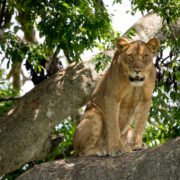
Tree climbing lions are found in the southern part of the Ishasha sector in Queen Elizabeth National Park. This character of lions climbing trees is only seen within Queen Elizabeth National Park and not elsewhere in Uganda.
While on a Uganda safari, tourists can see these lions playing within the trees, and others are seen resting in the branches but this is because
- They are fleeing from the insect bites mostly during the rainy season when the ground is infested with breeding tsetse flies.
- Escaping the heat on the ground when the temperatures are so high over 28 degrees Celsius.
- Cool view of grabbing their prey
The climbing lions tend to climb wide branched trees within the national park, and these include sycamore fig trees and acacia trees. These offer a comfortable wide place for resting and are perfect for shelter in the rainy season.
Activities In Queen Elizabeth National Park
Game drives
Game drives are the backbone of any wildlife safari in Queen Elizabeth National Park. The park’s massive savannah plains, most especially in areas such as Kasenyi, are so rich in wildlife. While on the game drives, tourists can observe lions resting in the grasslands; elephants and buffaloes in large herds; Uganda Kobs; antelopes; warthogs; and leopards, who are rarely seen.
Games drives are carried out in the morning and evening, offering the best opportunities for wildlife spotting, thus delivering the classic excitement of an African safari. The best season for game drives within Queen Elizabeth National Park is in the dry season between the months of June to September and January to February. During the dry season the tracks are dry and the grass is short thus offering clear and better wildlife viewing while on a Uganda safari.
Kazinga boat cruise
Boat cruise safaris are the most famous activities within the park and are carried out along the Kazinga Channel, which is 40 km long. A boat cruise is carried out twice and thrice during the peak season. Tourists can book a morning, afternoon and evening boat cruise. The bookings are done at mweya offices and tourists can book a shift according to their preferences.
While on the boat cruise safari, tourists can encounter African elephants, buffaloes, hippos and crocodiles as well as bird species. The boat cruise offers a different viewpoint of a wildlife safari, thus making it a must-do on any Uganda safari.
Chimpanzee trekking
Chimpanzee trekking is another eye-catching activity that is carried out in the Kyambura Gorge, which is frequently called the Valley of Apes in Queen Elizabeth National Park. The Kyambura Gorge is home to habituated chimpanzees that are ready to be tracked while on a Uganda safari.
While tracking, tourists will observe the chimpanzees jump from one branch to another, watch them feed, breastfeed and many more. The chimpanzees adapt to the environment in Kyambura Gorge because of the existence of a rainforest as well as the gorge, which is drained by the Kyambura River, hence making it look like it’s a world on its own.
Lion tracking
Lion tracking is an interesting activity that involves tracking the lions with the radiator collar in Kasenyi Plains. The tracking of lions is research and is conducted by professional researchers from the Uganda Carnivore Program. While on a Uganda safari, lion tracking is mainly carried out in the Kasenyi plains, and tourists will learn a lot about the African lions and as well get close to the king of the jungle; you can as well watch lions hunting a kob for a day’s meal.
The lion tracking activity is carried out by a few people to avoid interference with nature and thus allow a deeper learning of the lion habits and most of all, it offers the perfect lion tracking experience.
Birding
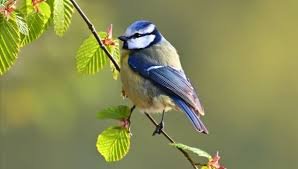
Birding in Queen Elizabeth National Park
The national park is blessed with over 619 bird species and some are recognized internationally. Queen Elizabeth National Park is recognized fully by the International Birding Association (IBA). The adaptability of the birds comes from the existence of a number of habitats, from the savannah woodland to the forests such as Kalinzu and Maramagambo that are next to the park.
While on a birding safari, tourists can spot birds while on the boat cruise at kazinga channel and these include kingfishers, the black bee-eaters, the African fish eagle, the fly catchers and cormorants, among others.
Nature walks
Nature walks within Queen Elizabeth national park for example, the Katwe crater drive, which is 27 km long, will display rolling hills, massive plains of savannah, and Mount Rwenzori views. The Katwe crater salt works are another feature that tourists shouldn’t miss while on the nature walk.
While at the lake, tourists will enjoy the whole process of salt mining and the narrative about the poor miners’ sacrifice to go and get salt from the acidic lake.
Cultural encounters
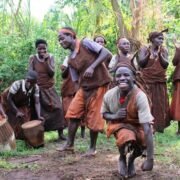
While on a cultural encounter within Queen Elizabeth National Park, tourists can enjoy the Kikorongo cultural dancers at the equator. Kikorongo is a group of women who are strongly rooted in African culture; they entertain tourists at the equator as well as make African crafts that tourists can purchase and take back home.
The fishing villages along the Kazinga Channel and Lake George, such as Businga Village, should be one of the choices tourists should carry out their community walks. While there, tourists enjoy activities such as fishing, boat racing, and sport fishing as well as fresh fish straight from the waters.


I have had some amazing wins here recently. The bonuses are generous and the local support team is very helpful. It feels like a lucky place to play. Visit phjililucky
The vibe here is just great. Tons of fun options and the community is pretty active. I am having a blast at 777betfunlogin
The atmosphere of this site is just wonderful. It feels like a real casino right from my living room. Five stars for m3fcassino
Finally a platform that doesn’t lag! The graphics are crisp and the gameplay is fluid. If you love high quality gaming then pk9777cxgame is perfect.
Finally an app that does not crash every five minutes. The login process is seamless and the graphics are top notch. Love how convenient it is to play on the go via evojililoginapp.
The login process is seamless and the bonuses are actually worth it. I’m really enjoying my time on pin777loginregister so far.